Home / Things to Do at Home / Things to Do at Home with Primary-Aged Kids
Things to Do at HomeThings to Do at Home with Primary-Aged Kids
Primary-aged children in the school holidays need a mix of activity and independence: a project to work on, time outside, and the freedom to choose what they do. A den in the garden, a baking afternoon, a nature walk, a craft project or a game with friends will fill a day, and the best days are the ones where the children have a say in the plan.
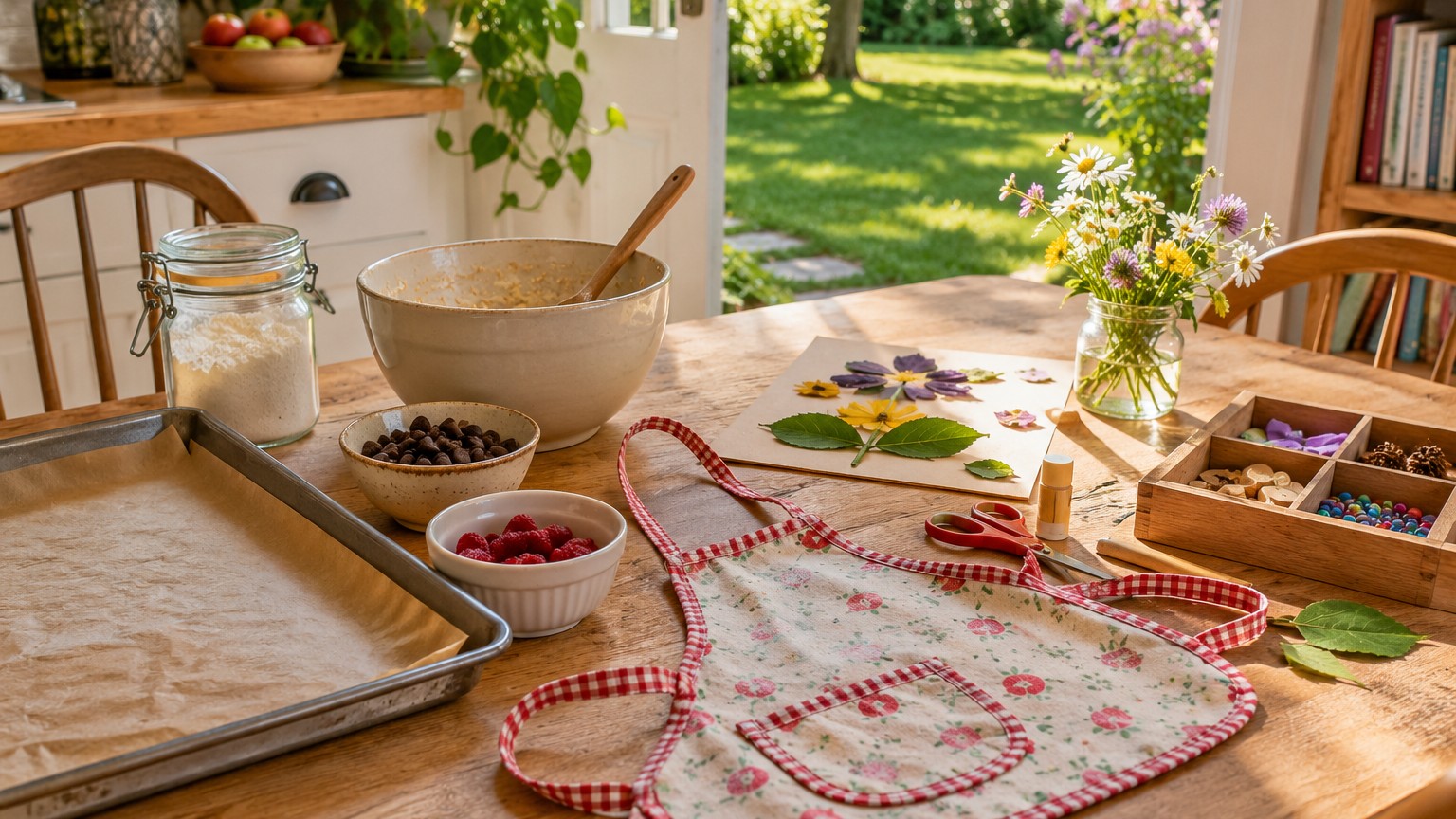
Projects that last the week
Give them a choice, and they will enjoy the day more.
A project that lasts the whole break gives the holidays a shape. Building a model, making a scrapbook, growing a plant, or learning a magic trick all work, because they give the child something to return to each day. The project does not have to be ambitious. It has to be theirs.
Let the child choose the project, and help them plan it. A list of what they need, a trip to buy the materials, and a place to work on it are enough. Check in each day, praise the progress, and do not worry if the project changes halfway through. The changing is part of it.
Outdoor play at home
The garden is the best playground a primary-aged child has. A ball, a skipping rope, a paddling pool, or a den built from branches and blankets are all enough, and the garden is where children learn to play without an adult organising it. That kind of play is valuable, and it is the kind that disappears when every day is planned.
If there is no garden, the park is the alternative. A ball, a frisbee or a scooter turn a park visit into a game, and a walk to the park is exercise in itself. Go in the morning, when the park is quieter, and let the children play until they are ready to come home.
Friends and social time
Primary-aged children need friends in the holidays, because school is where they see their friends most days, and the holidays take that away. A playdate, a day with a cousin, or an afternoon at a friend's house all help, and they are worth organising early, because other families are planning too.
A simple playdate is enough. It does not need to be a trip or an event. Two children, a garden, and a few toys will fill an afternoon, and the social time matters more than the activity. Children who have seen their friends in the holidays go back to school happier than those who have not.
Quiet time and reading
Quiet time is part of the day, not a punishment. A book, a puzzle, a drawing, or an hour of building with Lego all give a child time to themselves, and they help the child recharge after a busy morning. The holidays are long, and a child who has no quiet time will be tired by the end of the first week.
Reading is the quiet activity that matters most. A book that the child chooses, read for pleasure, keeps reading going through the holidays without feeling like school. Let the child choose the book, even if it is one they have read before, because a book they enjoy is a book they will finish.
A project for the week, time in the garden, a playdate with a friend, and a quiet hour with a book. Primary-aged children need a mix, and they need a say in it. Give them both, and the holidays look after themselves.
Your checklist
- Let the child choose a project that lasts the whole break.
- Help the child plan the project with a list of what they need and a place to work on it.
- Let the children play in the garden without an adult organising it.
- Arrange a playdate early, because other families are planning too.
- Give the child a quiet hour with a book they chose themselves.
- Let the child choose the book, even if it is one they have read before.
2027 at a glance
A project that lasts the whole break gives the longest holiday its shape.
- February half-term: 15 to 19 Feb
- Easter: 26 Mar to 9 Apr
- May half-term: 31 May to 4 Jun
- Summer: 22 Jul to 31 Aug
- October half-term: 25 to 29 Oct
- Christmas: 20 Dec 2027 to 3 Jan 2028
Most common dates in England. Councils and academies can differ, so check your school's dates.
More guides on this topic