Home / Preparing for the Holidays / Maths Practice in the Holidays: Keeping It Light
Preparing for the HolidaysMaths Practice in the Holidays: Keeping It Light
Maths practice in the holidays works best when it is light, short, and built into everyday life, rather than a worksheet at the kitchen table. Cooking teaches measuring, shopping teaches money, a board game teaches counting, and a journey teaches time, so a child who does a little maths every day will come back to school sharper.
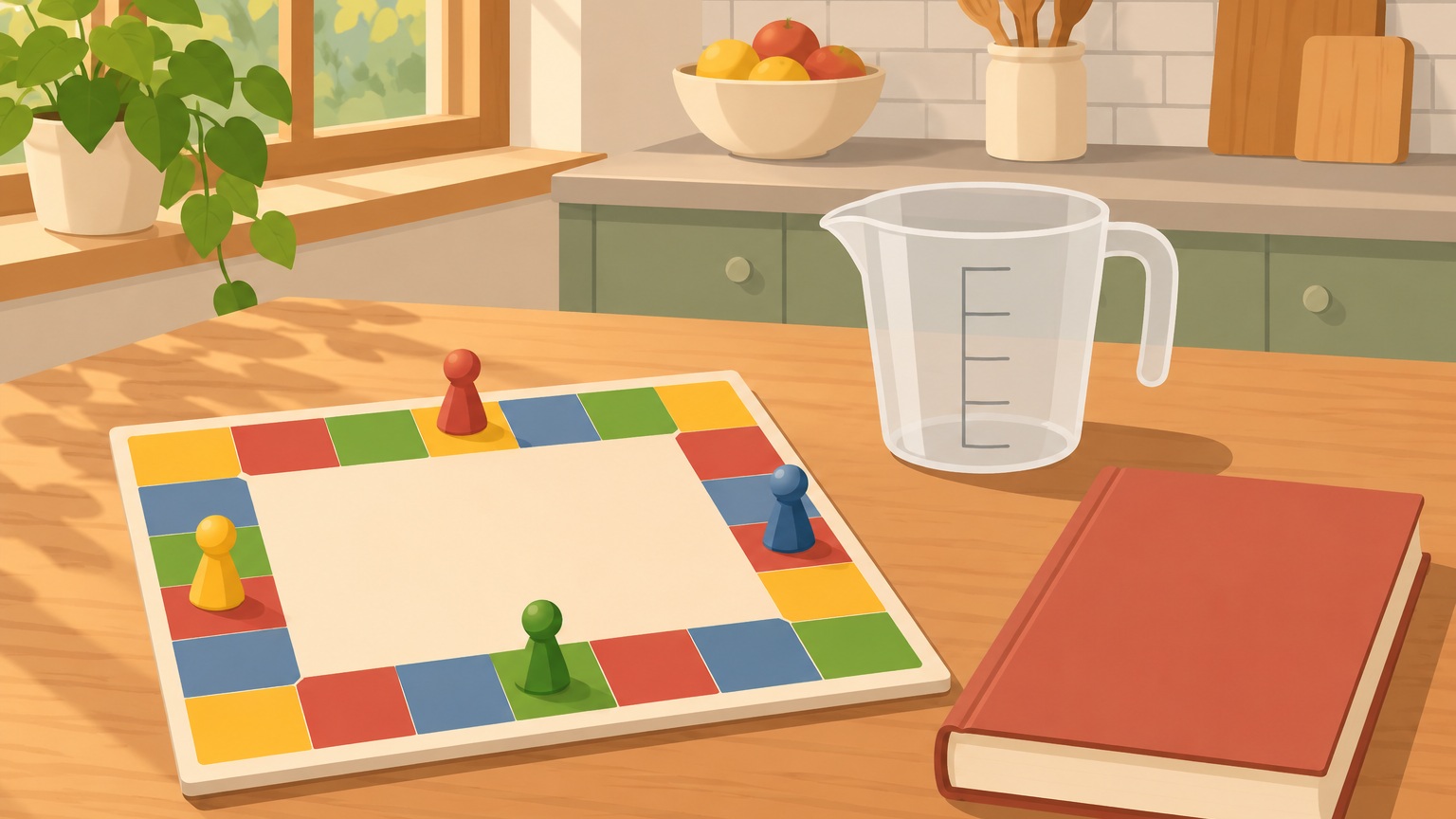
Maths in everyday life
Cooking is the best maths lesson in the holidays, because it needs measuring, weighing, and halving or doubling a recipe. A child who measures out 200 grams of flour, or who works out how much they need if they double the recipe, is doing maths, and they are doing it for a reason.
Shopping is the next best. A child who works out the change from a ten pound note, or who compares the price of two items, is doing maths in a real situation. Give the child a small amount of money and let them work out what they can buy, and the maths will happen without a lesson.
Games that use maths
Board games are full of maths. Monopoly teaches money, Snakes and Ladders teaches counting, and card games teach adding and probability. A game played together is a maths lesson that feels like a game, and the child will not notice that they are learning.
Online games and apps can help too, but they should be a supplement, not a replacement. An app that practises times tables for ten minutes a day is useful, but it is not a substitute for the maths that happens in cooking, shopping and games. Use the app as a top up, not as the main event.
Short and regular
A little maths every day is better than a lot once a week. Ten minutes a day, whether it is a quick game, a recipe, or a few sums, is enough to keep the child's maths going through the holidays. The key is regularity, not length, and a short daily habit is easier to keep than a long weekly session.
Do it at a regular time, such as after breakfast or before lunch, so it becomes part of the day. A habit that is regular is a habit that sticks, and a habit that is irregular is one that will be forgotten by the second week.
When maths is a struggle
If your child struggles with maths, the holidays are not the time to push them. A child who finds maths hard at school will not enjoy it more in the holidays, and pushing them will make them dislike it more. The best approach is to keep the maths light and fun, and to focus on the things they can do, rather than the things they cannot.
If you are worried about your child's maths, talk to their teacher before the holidays, and ask what would help. The teacher will know what the child needs, and they can suggest a few things to do over the break. A short conversation with the teacher is more useful than a workbook bought in a panic.
Cooking, shopping and board games are maths, and ten minutes a day is enough. Keep it light, keep it regular, and keep it fun, and the maths will look after itself.
Your checklist
- Measure out ingredients and double a recipe while cooking together.
- Give the child a small amount of money and let them work out what they can buy.
- Play Monopoly for money, Snakes and Ladders for counting and card games for adding.
- Use a times tables app for ten minutes a day as a top up, not as the main event.
- Do ten minutes of maths a day at a regular time such as after breakfast or before lunch.
- Keep maths light and fun if your child struggles with it, and focus on what they can do.
- Talk to the teacher before the holidays and ask what would help with maths.
2027 at a glance
Cooking, shopping and board games are maths, and ten minutes a day is enough.
- February half-term: 15 to 19 Feb
- Easter: 26 Mar to 9 Apr
- May half-term: 31 May to 4 Jun
- Summer: 22 Jul to 31 Aug
- October half-term: 25 to 29 Oct
- Christmas: 20 Dec 2027 to 3 Jan 2028
Most common dates in England. Councils and academies can differ, so check your school's dates.
More guides on this topic